Why an Interactive Flat Panel is Cheaper than a Projector for Indian Classrooms: The 5-Year Cost Comparison
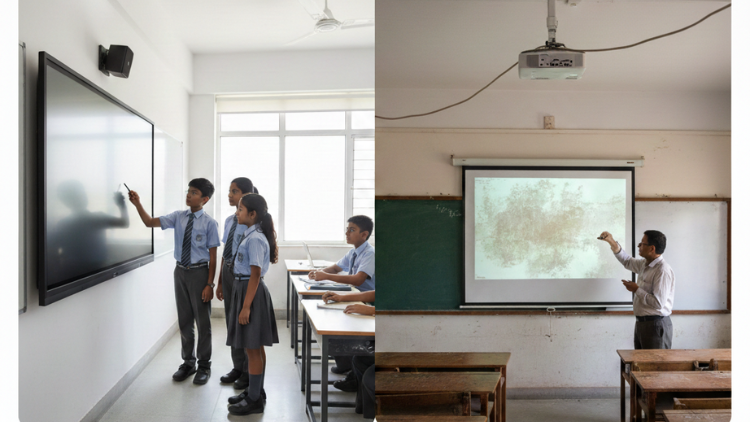
Initial Purchase Cost: The First Impression

- Projector unit
- Projection screen
- Mounting bracket
- External speakers
- Cables and installation
- Large 4K display
- Built-in speakers
- Touch screen
- Inbuilt operating system
- Teaching tools
Maintenance Cost Over 5 Years

Projector Maintenance
- Lamp replacement every 1–2 years
- Regular cleaning
- Dust removal
- Technician visits
Interactive Panel Maintenance
Electricity Consumption Difference
Projectors:
- Use high brightness continuously
- Often require extra speakers
- Consume more power over time
Interactive panels:
- Use energy-efficient LED technology
- Include built-in sound systems
- Maintain stable brightness
Durability and Lifespan

Downtime and Teaching Loss

The school:
- Calls a technician
- Waits for repair
- Reschedules classes
- Learning suffers.
Extra Equipment Expenses
- External speakers
- Interactive whiteboard
- Extra cables
- Document camera
Learning Experience and Engagement
- Low visibility in bright classrooms
- Shadow problems
- Reduced clarity after lamp aging
- Clear 4K display
- Multi-touch interaction
- No shadow interruption
- Instant writing and saving
Five-Year Cost Comparison
|
Projector (5-Year Scenario)
|
Interactive Panel (5-Year Scenario)
|
|
2–3 lamp replacements
|
One-time investment
|
|
Maintenance visits
|
Minimal maintenance
|
|
Higher electricity
|
Stable electricity use
|
|
Possible replacement after 5 years
(Total expense keeps increasing.)
|
Longer working life
(Total expense keeps decreasing.)
|
Why Indian Schools Are Making the Shift

- Improve teaching quality
- Enhance student engagement
- Build a strong digital infrastructure
- Reduce long-term expense
Introducing Studynlearn Interactive Flat Panels

Studynlearn Interactive Flat Panels are among the best options for Indian schools looking for a cost-effective yet high-performance digital teaching solution. These panels are designed to enhance classroom learning with integrated K-12 digital content and advanced AI features.
They offer a 4K UHD display for crystal-clear visuals, supporting interactive and engaging lessons. With multi-touch functionality, multiple students can interact simultaneously, promoting collaboration and active learning. The panels come preloaded with educational content, making them ideal for various subjects.
Additionally, they include a 3-year on-site warranty, ensuring long-term peace of mind for schools. The energy-efficient design further helps in reducing electricity costs, making them a smart investment for schools.
Key Features of Studynlearn Interactive Flat Panels:
- 4K UHD Display: Offers superior clarity for immersive learning.
- Google EDLA: Certified with Google EDLA certification.
- Multi-Touch Support: Allows multiple students to interact simultaneously.
- Preloaded Educational Content: Ready-to-use, curriculum-aligned content.
- 3-Year On-Site Warranty: Ensures long-term reliability.
- Energy-Efficient Design: Helps reduce electricity costs.
Studynlearn AI – Personalized Learning for Indian Classrooms

Studynlearn has developed its own education-focused AI, designed to make teaching more efficient and personalized. Built by a dedicated in-house team, this AI offers step-by-step support tailored to the Indian curriculum. It provides instant lesson planning, quick topic searches, and even question paper generation, significantly reducing teachers' workload.
Key Features of Studynlearn AI:
- Curriculum-Focused: Provides step-by-step answers for Indian classrooms.
- Expert Development: Created by a 155-member in-house team.
- Multilingual Support: Available in English, Hindi, and regional languages.
- Instant Lesson Planning: Quick topic searches and paper generation.
- Vast Resource Library: Access to 6,50,000+ questions.
- Custom Content: Upload PDFs for personalized study materials.
- Fast Content Generation: Creates chapter-wise notes in three days.
Conclusion
- Projectors require regular lamp replacement
- Maintenance adds recurring expense
- Electricity usage remains higher
- Lifespan remains shorter
Frequently Asked Questions (FAQs)
Yes, in most cases it is cheaper in the long run. A projector looks affordable at first, but you must replace lamps every 1–2 years. You also pay for maintenance, servicing, and higher electricity bills. Over five years, these costs add up quickly. An interactive flat panel does not require lamp replacement and needs very little maintenance. It also consumes stable power and lasts longer. When you calculate the total digital classroom equipment cost instead of just the purchase price, the interactive panel often becomes more economical for Indian schools.
In Indian classrooms, projector lamps usually need replacement every 1 to 2 years, depending on usage. Most schools run classes for 6 to 8 hours daily, which reduces lamp life faster. Dust and voltage fluctuations can also affect performance. A single lamp replacement can cost thousands of rupees. Over five years, schools may replace lamps two or three times. This recurring expense increases the overall digital classroom equipment cost and makes projectors more expensive than they initially appear.
An interactive flat panel typically lasts between 7 to 10 years with proper care. It does not rely on fragile lamp technology like a projector. Most brands provide 3 to 5 years of warranty, which gives schools additional security. The display brightness remains stable over time, and there are fewer moving parts inside. This long lifespan makes it a reliable investment for Indian schools. When you compare durability in the projector vs interactive panel discussion, interactive panels clearly offer better long-term value.
Yes, electricity consumption differs noticeably. Projectors operate at high brightness levels and often require additional speakers, which increases overall power usage. Interactive flat panels use LED technology and include built-in audio systems. They optimize brightness and operate efficiently throughout the day. Over five years, even small differences in daily power usage create noticeable savings. Lower electricity consumption helps reduce digital classroom equipment cost, especially in schools that operate multiple classrooms daily.
Interactive flat panels provide much better visibility. Projectors often struggle in bright classrooms, especially during daytime. Teachers may need to close curtains to improve clarity. Shadows also appear when teachers stand in front of the screen. Interactive panels deliver bright 4K displays with anti-glare glass. Students can see clearly from the last bench without dimming the lights. Better visibility improves focus and understanding. In the projector vs interactive panel comparison, clarity and viewing comfort strongly favor interactive panels.
No, most interactive panels are designed to be user-friendly. Teachers can write directly on the screen, play videos, open PDFs, and annotate instantly. Many panels support Android systems and simple touch controls. Training sessions are usually short and practical. Teachers adapt quickly because the interface feels similar to a smartphone or tablet. Once they start using it regularly, they find it easier than managing projector alignment, cables, and external devices.
Yes, small-budget schools should think long-term. While the initial price of an interactive panel may be higher, the five-year cost comparison often favors it. Schools save money on lamp replacement, maintenance, and electricity. They also improve classroom engagement and school reputation. Instead of focusing only on immediate spending, schools should evaluate total digital classroom equipment cost. Smart investment decisions help institutions grow steadily without facing repeated repair expenses.
Related post:
- Best Interactive Flat Panel for Classroom - How to Choose the Right One
- Interactive Flat Panel Price in India (Complete Guide)
- Studynlearn Launches India’s First Android 16 Interactive Flat Panel – The Future of Smart Classrooms
- Interactive Flat Panel 75 Inch - Best for Large Classroom Setup
- Google EDLA vs. Non-EDLA Interactive Panels: What Indian School Owners Need to Know in 2026
- Why Studynlearn Is the Best Smartboard for Teaching in India
- Best Interactive Flat Panel in 2026 — Top 3 Picks for Indian Classrooms & Offices
- Best Digital Board for Teaching: Comparison of Leading Brands
- Interactive Flat Panel Benefits for Teachers and Students
- Smartboard for Classrooms: Why Schools Need It?