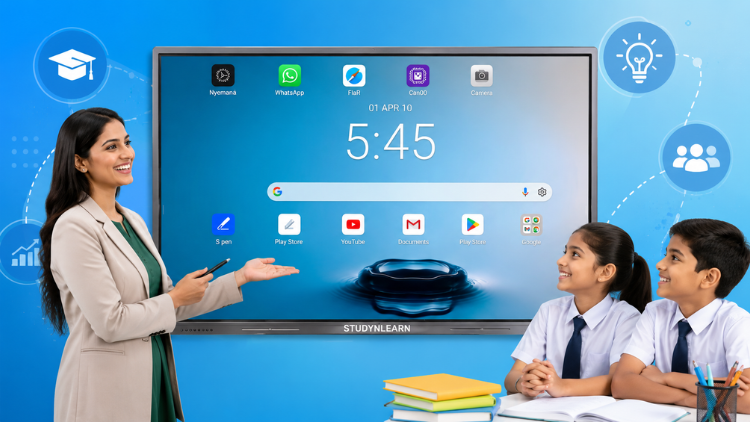
Schools across India are embracing digital transformation faster than ever before. Teachers need engaging tools, students expect interactive learning experiences, and school leaders want technology that delivers measurable results. Traditional teaching methods still play an important role, but modern classrooms now require smarter solutions that improve learning outcomes and classroom efficiency.
This shift has encouraged many schools to invest in interactive classroom technology. One of the most popular solutions today is the interactive flat panel. Many educators now consider the best interactive flat panel an essential tool for creating engaging, collaborative, and future-ready learning environments.
But is a smart board really worth the investment? The answer depends on how schools use them and the value they deliver over time. Let's explore.
What Is an Interactive Flat Panel?
An interactive flat panel is a large touchscreen display designed specifically for teaching and learning. It combines the functionality of a computer, whiteboard, projector, and presentation screen into a single device.
Teachers can write directly on the screen, display videos, annotate documents, access educational apps, and conduct interactive lessons. Students can also participate by solving problems, drawing diagrams, and collaborating on activities.
Unlike a traditional smart board, the best interactive flat panel does not require a projector. It delivers sharp visuals, responsive touch performance, and a clutter-free classroom setup.
In simple terms, the best interactive flat panel helps teachers make lessons more engaging and easier to understand.
Why Schools Are Switching to Interactive Flat Panels
Modern classrooms demand more than lectures and textbooks. Schools need technology that supports visual learning, collaboration, and digital content.
Several factors drive this transition:
Growing adoption of digital learning tools
Hybrid and blended learning requirements
Increased focus on student engagement
Demand for interactive teaching methods
Need for better classroom efficiency
Many schools previously relied on a projector-based smart board system. However, maintenance issues, shadow problems, and lower display quality often limited their effectiveness.
As a result, many institutions now prefer the best interactive flat panel solutions that provide a smoother and more reliable teaching experience.
Key Benefits for Teachers and Students
Better Engagement
Students learn more effectively when they actively participate in lessons. Interactive quizzes, multimedia content, animations, and touch-based activities help maintain attention throughout the class.
Collaborative Learning
Smart board encourages teamwork. Students can work together on projects, solve problems on-screen, and participate in group activities.
Multimedia Teaching
Teachers can integrate videos, simulations, images, and educational software into lessons. This approach helps explain complex concepts more clearly.
Easier Lesson Delivery
Teachers can save notes, access cloud resources, and switch between applications quickly. This reduces preparation time and improves classroom productivity.
Improved Participation
Even shy students often feel more comfortable interacting with digital content. Touch-based learning encourages greater classroom involvement.
Reduced Maintenance
Unlike projector-based systems, interactive flat panels do not require lamp replacements, projector alignment, or frequent calibration. Schools spend less time and money on maintenance.
This comparison explains why many schools replacing a projector or older smart board setup now choose the best interactive flat panel available within their budget.
Real Classroom Scenario
Imagine a Grade 7 science class learning about the human digestive system.
The teacher displays a 3D animated diagram on the interactive flat panel. Students observe each stage of digestion in real time. The teacher annotates directly on the screen and highlights important functions.
Next, students come forward and drag labels to the correct organs. The class then completes a short quiz using touch interaction.
Instead of simply listening to a lecture, students actively participate in the learning process. The lesson becomes more engaging, memorable, and effective.
Schools eliminate projector lamp replacements, calibration costs, and multiple connected devices. This reduces operational expenses over time.
Reduced Hardware Dependency
A single panel often replaces a projector, computer monitor, whiteboard, and presentation system.
Improved Learning Outcomes
Interactive teaching methods improve retention, participation, and understanding. Students engage more deeply with classroom content.
Better Technology Adoption
Teachers adapt more quickly when technology feels intuitive and reliable. Interactive flat panels simplify digital teaching.
School Branding and Admissions
Parents increasingly look for schools that embrace modern educational technology. Investing in the best interactive flat panel solutions demonstrates a commitment to innovation and future-ready learning.
When schools evaluate the total cost of ownership and educational impact, the best interactive flat panel often delivers a positive return on investment.
How to Choose the Best Interactive Flat Panel for Schools
Before purchasing, schools should evaluate several important factors.
Android Version
Choose the latest Android OS for better performance, security, and application compatibility.
Touch Accuracy
Accurate and responsive touch technology ensures a smooth classroom experience.
4K Display
A high-resolution display improves visibility and content clarity from every corner of the classroom.
RAM and Storage
Adequate RAM and storage support faster multitasking and smoother application performance.
Processor Performance
A powerful processor ensures quick response times and efficient lesson delivery.
Screen Size Options
Select screen sizes based on classroom dimensions and student capacity.
Warranty and Support
Reliable after-sales support protects the school's investment and minimizes downtime.
Schools searching for the best interactive flat panel should prioritize performance, durability, ease of use, and service quality rather than price alone.
Introducing Studynlearn Interactive Flat Panels
Studynlearn Interactive Flat Panels are among the best interactive flat panel options for Indian schools looking for a cost-effective yet high-performance digital teaching solution. These panels are designed to enhance classroom learning with integrated K-12 digital content and advanced AI features.
They offer a 4K UHD display for crystal-clear visuals, supporting interactive and engaging lessons. With multi-touch functionality, multiple students can interact simultaneously, promoting collaboration and active learning. The panels come preloaded with educational content, making them ideal for various subjects.
Additionally, they include a 3-year on-site warranty, ensuring long-term peace of mind for schools. The energy-efficient design further helps in reducing electricity costs, making them a smart investment for schools.
SNL Board: Studynlearn panels come with an integrated AI Board designed to enhance classroom teaching. It offers complete K–12 content, AI course, 3D models, interactive tools, and rich teacher resources to make lessons more engaging and effective. Teachers can easily generate question papers for classes 1 to 12 and download them in document or PDF format.
Students can perform virtual science experiments, watch real-life videos, and explore practical examples related to their topics, making learning more interactive and easier to understand.
Key Features of Studynlearn Interactive Flat Panels:
4K UHD Display: Offers superior clarity for immersive learning.
Google EDLA: Google EDLA Certified Interactive Flat Panels.
AI Board: In-built AI board with numerous Interactive tools for interactive learning and teaching. Made In-house with a team of 155 members.
Operating System: Latest Android 16 with Octa-core Processor
Multi-Touch Support: Allows multiple students to interact simultaneously.
Studynlearn AI – Personalized Learning for Indian Classrooms
Studynlearn AI – Personalized Learning for Indian Classrooms
Studynlearn has developed its own education-focused AI, designed to make teaching more efficient and personalized. Built by a dedicated in-house team, this AI offers step-by-step support tailored to the Indian curriculum. It provides instant lesson planning, quick topic searches, and even question paper generation, significantly reducing teachers' workload.
Key Features of Studynlearn AI:
Curriculum-Focused: Provides step-by-step answers for Indian classrooms.
Expert Development: Created by a 155-member in-house team.
Multilingual Support: Available in English, Hindi, and regional languages.
Instant Lesson Planning: Quick topic searches and paper generation.
Vast Resource Library: Access to 6,50,000+ questions.
Custom Content: Upload PDFs for personalized study materials.
Fast Content Generation: Creates chapter-wise notes in three days.
Conclusion
Interactive flat panels have become much more than classroom display devices. They support collaboration, improve engagement, simplify teaching, and help schools create modern learning environments.
Compared with projectors and older smart board systems, interactive flat panels offer better performance, lower maintenance, and stronger long-term value. They also help schools strengthen their digital transformation initiatives and enhance classroom experiences.
For school leaders evaluating educational technology investments, the answer is clear: interactive flat panels are worth considering. Choosing the best interactive flat panel from a trusted brand such as Studynlearn can help schools improve learning outcomes while preparing students for a technology-driven future.
For More Information, Call or WhatsApp us on: 89270-89270.
Frequently Asked Questions (FAQs)
Yes, interactive flat panels generally offer better performance than projectors. They provide brighter displays, sharper 4K visuals, faster touch response, and lower maintenance requirements. Unlike projectors, they do not suffer from shadow interference or lamp replacement costs. Teachers can interact directly with content on the screen, making lessons more engaging. Schools also benefit from longer operational life and improved classroom efficiency. For institutions seeking reliable digital learning tools, interactive flat panels often provide a more practical and cost-effective solution.
Most high-quality interactive flat panels last between 50,000 and 80,000 operating hours. In a typical school environment, this can translate into many years of daily classroom use. Their commercial-grade displays and durable touch technology support long-term performance. Unlike projectors, schools do not need to replace lamps or perform frequent calibration. Regular cleaning and proper usage help maximize lifespan. Choosing a reputable educational technology provider also ensures better reliability and long-term support.
The ideal size depends on classroom dimensions and student capacity. Smaller classrooms often use 65-inch panels, while medium-sized classrooms prefer 75-inch displays. Large classrooms and lecture spaces may benefit from 86-inch models. Schools should ensure students can clearly view content from the back of the room. Display resolution, brightness, and viewing angles also influence visibility. Evaluating classroom requirements before purchase helps schools choose the most suitable screen size.
Yes, interactive flat panels can function without an internet connection. Teachers can write on the screen, use annotation tools, display locally stored files, and conduct lessons offline. Internet access becomes useful when accessing cloud resources, educational platforms, online videos, and web-based applications. Schools with limited connectivity can still use many core teaching features effectively. This flexibility makes interactive flat panels practical for diverse educational environments.
Yes, interactive flat panels work exceptionally well in primary classrooms. Young learners respond positively to touch-based activities, visual content, animations, and interactive games. Teachers can create engaging lessons that encourage participation and collaboration. The technology helps explain concepts through images, videos, and hands-on learning experiences. Interactive learning also improves attention and retention among younger students. Many primary schools use interactive flat panels to make foundational learning more enjoyable and effective.
Most teachers learn to use interactive flat panels quickly because the interface resembles modern smartphones and tablets. Basic functions such as writing, opening files, presenting content, and using educational applications are straightforward. Many manufacturers provide onboarding sessions and training resources. Schools often find that teachers become comfortable with daily usage after only a short introduction. Continuous professional development can further enhance classroom integration and maximize educational benefits.
Interactive flat panels require very little maintenance compared with projectors. Schools typically need only routine screen cleaning and occasional software updates. Since the display technology does not rely on projector lamps, institutions avoid many recurring maintenance costs. The absence of calibration requirements further reduces technical workload. Regular inspections and proper handling help maintain performance. Overall, schools experience lower maintenance expenses and fewer classroom disruptions.
Most interactive flat panels include digital whiteboarding tools, annotation software, screen-sharing applications, and file management features. Some models also offer educational content platforms, collaboration tools, and classroom management software. Android-based panels allow access to additional educational applications through compatible app ecosystems. Schools should evaluate software features alongside hardware specifications. Effective software enhances teaching efficiency and improves classroom interaction.
Yes, interactive flat panels can significantly improve student engagement. Touch-based activities, multimedia lessons, collaborative exercises, and interactive quizzes encourage active participation. Students often stay focused longer when lessons include visual and interactive elements. Teachers can present information in multiple formats, making concepts easier to understand. Greater participation frequently leads to improved comprehension and knowledge retention. Schools that integrate interactive teaching strategies often observe stronger classroom involvement.
Schools are replacing traditional whiteboards because modern classrooms require more dynamic teaching tools. Interactive flat panels combine writing, multimedia presentation, collaboration, and digital resource access in one device. Teachers can display videos, annotate content, save lesson notes, and conduct interactive activities without switching between multiple tools. These capabilities support modern teaching methodologies and enhance student engagement. As digital learning becomes increasingly important, interactive flat panels offer a more versatile classroom solution.
We use cookies to enhance your browsing experience and analyze site traffic. By clicking "Accept All", you consent to our use of cookies as described in our Privacy Policy.